
Coat Care
Matting in Dogs: Why It Happens and How to Prevent It
A mat is more than a tangle. It pulls on your dog's skin, traps moisture, and hides problems you can't see. Here's how matting really starts, how to stop it at home, and what to do when it has already gone too far. Straight from our table in Miami Lakes.
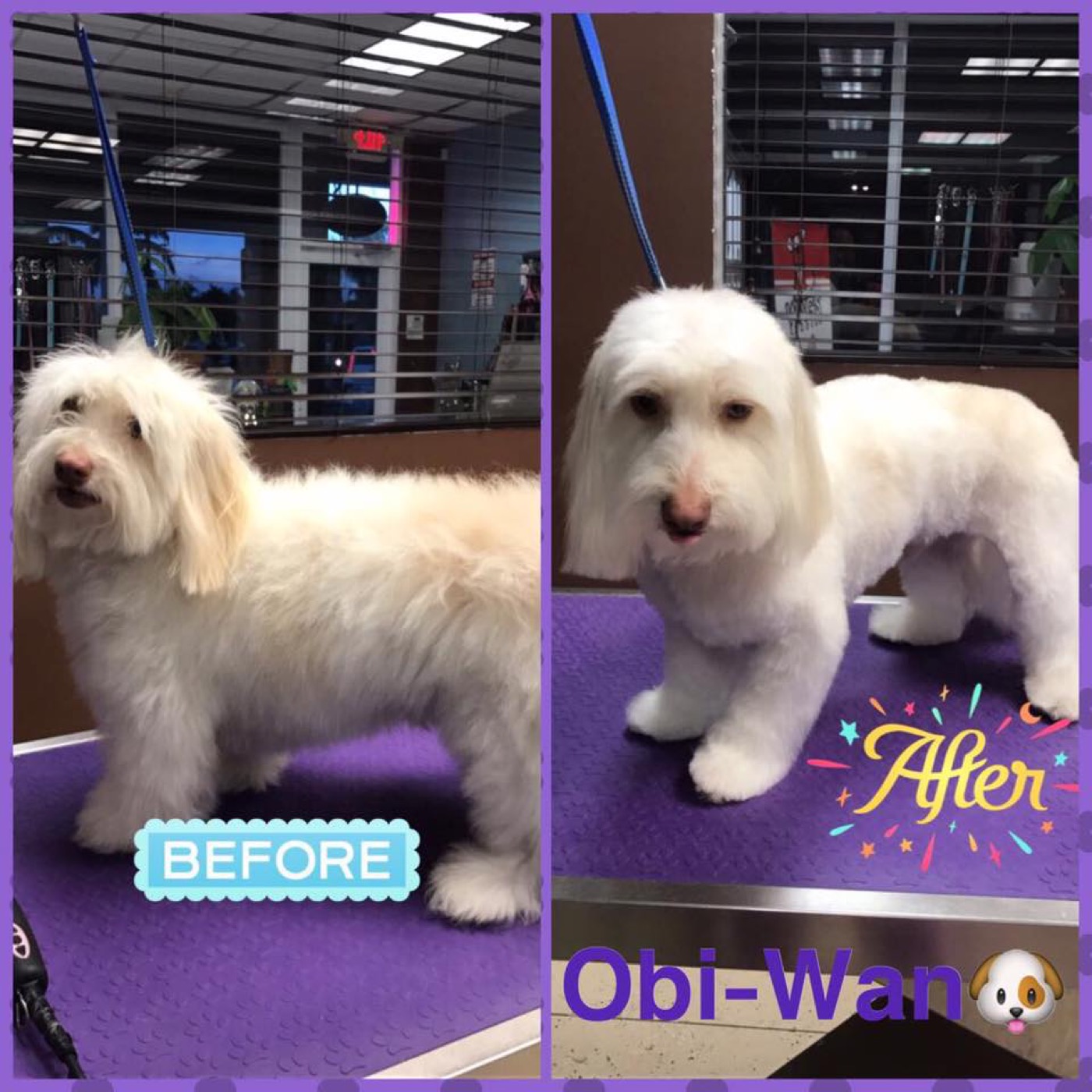
Matting is the problem we wish more owners understood before it starts. It almost never shows up overnight. It builds quietly, a little loose hair at a time, until one day you run your hand down your dog's side and feel a hard, packed clump that won't move. By then the easy fixes are gone.
After more than twenty years of grooming dogs in Miami Lakes, we've seen every stage of it, from a single tangle behind the ear to a coat so matted the kindest thing we can do is shave it short. The good news is that matting is one of the most preventable problems in dog care. Once you understand what a mat is and where it likes to form, keeping it away becomes a simple habit instead of a battle.
The short version
A mat is loose hair that tangled and packed tight against the skin. It is not just a looks problem. It pulls, traps moisture, and hides sores. You prevent it by brushing all the way to the skin a few times a week with a slicker brush and a metal comb, watching the high-friction spots, and keeping a regular grooming schedule. Once a coat is badly matted, a humane shave is usually kinder than brushing it out.
What a mat actually is (and why it's more than cosmetic)
Most owners picture a mat as a bad tangle, like a knot in human hair you could comb out if you were patient enough. That's not quite what's happening. A mat is loose, shed hair that never made it out of the coat. Instead of falling to the floor, those dead hairs stay woven into the living hair around them. Add a little movement, moisture, and friction, and the loose hairs twist around the healthy ones and lock together into a dense pad that sits right against the skin.
Here's why that matters. A mat doesn't float on top of the coat. It anchors to the skin and pulls. Every time your dog walks, shakes, or lies down, that mat tugs at the skin underneath, a discomfort they carry all day. Dogs are very good at hiding it.
Mats cause real trouble underneath, too. They trap moisture against the skin, along with dirt and debris, and air can't reach the skin at all. In a warm, damp climate like ours, that's a recipe for problems. We regularly find hot spots, raw red patches, sores, and even early skin infections under mats that looked like a harmless fluffy clump from the outside. The owner had no idea, because the mat hid the wound. That's the part people miss. A mat isn't just uncomfortable. It's a blindfold over your dog's skin.
In South Florida, the humidity speeds all of this up, which is part of why local dogs need a tighter rhythm than the same breed would up north. We cover that in our guide to how often you should groom your dog. A mat that might take weeks to cause skin trouble in a dry climate can turn into an irritated hot spot here in days.
Which coats mat the most
Every coat can mat if it's neglected, but some coat types are working against you from the start. If your dog falls into one of these groups, matting isn't a maybe. It's a constant low-level risk you have to stay ahead of.
Curly and doodle coats
This is the number one matting group, and it isn't close. Poodles, Goldendoodles, Sheepadoodles, Bernedoodles, Bichons, and other curly-coated dogs have hair that grows continuously and curls back on itself. The curl is the whole problem. When these dogs shed, the loose hair has nowhere to go. It gets caught in the surrounding curls and starts knitting itself into the coat almost immediately.
Doodle owners often get blindsided because the coat looks soft and full right up until it's matted to the skin. The fluffy surface hides what's happening underneath. We get into the specifics in our doodle grooming guide, but the headline is simple: a doodle coat needs hands-on brushing several times a week, plus a regular professional groom. There's no coasting with this coat type.
Long silky coats
Yorkies, Shih Tzus, Maltese, and other long, silky-coated dogs are the second big matting risk. Their hair grows long like human hair and tangles just as easily, especially around the face, ears, legs, and rear. If you love the long flowing look, you've signed up for near-daily brushing. Most pet owners with these breeds choose a shorter trim precisely because it keeps matting manageable and keeps the dog comfortable in our heat.
Double coats during a shed
People don't always expect double-coated dogs to mat, but they do, especially when the dead undercoat is blowing out. Golden Retrievers, German Shepherds, Huskies, and similar breeds carry a soft undercoat under a coarser outer coat. When that undercoat releases, the loose fluff packs down behind the ears, on the chest, and on the backs of the legs. In Miami, where dogs shed year-round instead of in tidy seasons, that undercoat is always accumulating. Without regular deshedding, it bonds into thick felt-like mats against the skin.
Quick risk check
Curly or doodle coat: highest risk, brush several times a week. Long silky coat: high risk, brush most days. Double coat: matting risk climbs during a shed, deshed regularly. Short and smooth coat: lowest risk, but still check the friction spots. If your dog is in any of the first three groups, matting prevention is a weekly job, not an occasional one.
Where mats form first
Mats don't appear evenly across the coat. They start in predictable places, and knowing them lets you catch a mat early. These are the spots we check first on every dog, and the ones we want you checking at home.
- Behind and around the ears. The hair here is fine and soft, the ears flop and rub, and most owners skip this spot when brushing. It's the single most common place we find a first mat.
- The armpits and where the legs meet the body. Constant motion plus skin-on-skin friction makes these little pockets mat fast and tight. They're also easy to miss because they're tucked away.
- Under the collar or harness. Anywhere gear sits against the coat all day, friction is grinding loose hair into knots. Collar lines and harness straps are classic mat zones.
- The chest and front of the legs. The chest catches everything, and the front legs move constantly, so tangles gather here and pack down.
- The rear, the back legs, and the sanitary area. High-friction, often damp, and frequently under-brushed. Mats here are uncomfortable and unsanitary.
- The tail and feathering. Long hair on the tail and the backs of the legs swings, drags, and tangles, especially on active dogs.
If you only have five minutes, spend them on these spots. A coat can look perfect across the back while a tight mat forms behind the ear or in an armpit you can't see. Feel for it, don't just look for it.
The real cause of matting
Strip away the breed talk and matting comes down to three forces working together: loose hair, moisture, and friction.
Loose hair that never gets brushed out. This is the engine of every mat. All dogs shed, even the ones marketed as non-shedding. In a curly or non-shedding coat, that loose hair stays trapped inside instead of dropping to the floor. If you don't remove it with a brush and comb, it has nowhere to go but into a knot. This is why brushing matters more than almost anything else you can do.
Moisture. Water and dampness make hair swell, cling, and lock together. A dog that swims, gets bathed and not fully dried, or just lives in our humid air is carrying damp hair that mats more easily. Moisture is the glue that turns a loose tangle into a solid mat.
Friction. Anything that rubs the coat back and forth works loose hair into knots. Collars, harnesses, the ground when a dog lies down, leg-on-leg movement when they walk. Friction is the motion that ties the knot.
Put those three together and you've got matting. Take away even one and you slow it way down. You can't stop the shedding or the Miami humidity. But you can remove the loose hair before it locks in. That single habit, done regularly, is the whole game.
How to prevent matting at home
Prevention isn't complicated, but it does have to be consistent. Here's exactly what works, in the order that matters.
The right tools
You need two tools, and most owners only own one. The first is a slicker brush, the rectangular brush with fine wire bristles, which lifts loose hair out of the coat. The second, and the one people skip, is a metal comb. The comb is your truth-teller. A slicker brush can glide across the top and feel thorough while tangles sit untouched underneath. A metal comb can't lie. If you can run it from the skin to the tip and it slides through freely, that section is mat-free. If it snags, you found a tangle the brush missed.
Line brushing, all the way to the skin
This is the technique that separates owners whose dogs never mat from those who fight it constantly. Most people brush across the top of the coat. That feels productive but accomplishes little, because mats form at the base, against the skin, where a surface brush never reaches.
The fix is called line brushing. Part the coat with your free hand so you can see the skin, then brush that small section from the skin outward. Move the part up a little, brush the new line, and work across the body in sections. It's slower than a quick once-over, but it's the only way to clear loose hair from the layer where mats start. After each section, run your metal comb through to confirm it's clean. Brush, then comb, every time.
How often to brush, by coat type
Frequency depends on the coat. As a starting point: curly and doodle coats need line brushing most days. Long silky coats need brushing most days too. Double coats need a thorough brush-out a couple of times a week, and more during heavy shedding. Short smooth coats can get by with a weekly once-over plus attention to the friction spots. When in doubt, brush more often. A five-minute habit beats a long catch-up session your dog won't enjoy.
Brushing around baths
Water and matting have a tricky relationship, so this part matters. The rule is simple: never let an existing mat get wet. Water makes a mat shrink and tighten, the same way a wool sweater shrinks in the wash. If you bathe a dog with a small tangle still in the coat, you can come out the other side with a hard knot that's far worse than what you started with.
So the order is: brush the coat out fully before the bath, getting every tangle while the hair is dry, then bathe. After, dry the coat all the way down to the skin and brush again as it dries. A coat left to air-dry damp, especially in our humidity, is quietly matting at the roots while it feels dry on top. Drying fully is one of the most overlooked steps in keeping a coat mat-free.
Mind the collar and harness
If your dog wears a collar or harness all day, check underneath it often, because that's a guaranteed friction zone. For dogs prone to matting, it helps to take the gear off when they're safely home and relaxing, so the coat gets a break from the rubbing. When you brush, give those gear lines extra time.
Keep a grooming schedule
Home brushing and professional grooming work as a team. Brushing keeps loose hair from packing down between visits, and a regular groom resets the coat, clears what you missed, and lets a trained set of hands catch a developing mat before it becomes a problem. Dogs that come in on a steady rhythm almost never reach the badly matted stage. Dogs that only come in "when they look rough" are the ones who end up needing a shave-down. A consistent schedule is the safety net under your home routine.
What happens when a dog comes in badly matted
Sometimes prevention slips, life gets busy, and a dog arrives already heavily matted. We want to be honest about what happens then, because owners are often surprised, and we'd rather you understand it ahead of time.
When a coat is tightly matted to the skin, brushing it out is not a kind option. To brush out a tight mat, you have to pull hard on hair that's locked to skin that's already sore underneath. It hurts, it can take hours, and it can tear or burn the skin in the process. No responsible groomer is going to put your dog through that to save a coat that will grow back in a few weeks anyway.
The humane choice is usually a short shave-down. We use a clipper to slide under the matted layer and remove it in one gentle pass, freeing the skin without yanking on it. It's not the fluffy look anyone hoped for, and we get it, the dog looks different for a while. But under those mats the skin can finally breathe, any hidden sores can be seen and treated, and your dog is comfortable again right away. The coat grows back. The discomfort of the mats does not have to.
A shave-down on a matted dog is also slow and careful work, because the skin under heavy mats is fragile and sometimes raw. If your dog reaches that point, there's no judgment from us. It happens, especially with doodles and silky coats. We just walk you through it and set you up so it doesn't happen again.
When to call a groomer instead of fighting it at home
Plenty of small tangles are fine to handle yourself. But there's a clear line where the right move is to stop and let a professional take over. Call us, or book a visit, when:
- You feel a mat that's tight against the skin and won't lift away when you slide a comb under it.
- The mats are widespread, not just one or two spots you can isolate.
- The skin under a mat looks red, raw, smells off, or feels warm. That can mean a hot spot or infection hiding underneath, and it needs careful, gentle handling.
- Your dog flinches, growls, or pulls away when you touch the area. That's pain, and forcing it will make grooming scary for them.
- You're reaching for scissors. Please don't cut a mat out at home. The skin lifts up into the base of a tight mat, and it's frighteningly easy to cut your dog. This is one of the most common home-grooming injuries we hear about, and it's completely avoidable.
There's no shame in handing it off. Tight matting is hard and a little risky to remove safely, and it's exactly what we do gently every day. Reach out through our contact page or just bring your dog by, and we'll feel the coat and tell you honestly whether it's a quick fix or a job for us.
Staying ahead of it
Matting is one of those problems that's almost entirely about timing. Catch the loose hair early and it brushes right out. Let it pack down and it becomes a knot, then a pad, then a shave-down. The whole job of prevention is staying on the early side of that line.
That's the thinking behind the way we work. Our full grooming menu, from a simple bath to full-service haircuts, always includes the hands-on coat check, nails, ears, glands, and the rest, so nothing drifts unnoticed between visits. For dogs that mat easily, the most reliable way to stay ahead is a steady rhythm rather than a scramble.
That's exactly why so many of our doodle and silky-coat families are on the Paws Membership. It builds the regular schedule right into the plan, so the coat never gets the chance to pack down. Members come in weekly with no appointment needed, spread the cost into a simple monthly plan, and pick up a discount on boarding. For a coat that wants to mat, a consistent schedule is the best thing you can do, and the membership makes it automatic.
Whatever you decide, the takeaway is the same. Brush to the skin, watch the friction spots, dry your dog fully, and don't let the schedule slip. Do that, and the word "matted" stays out of your vocabulary. And if it's already crept in, bring your dog by. We've handled it for Miami Lakes families since 2003, and we'll get your dog comfortable again, gently.
Frequently asked questions
What is matting in dogs and why is it a problem?
A mat is a knot of loose and living hair that has tangled and tightened against the skin. It is more than a cosmetic issue. A mat pulls on the skin every time your dog moves, traps moisture and dirt underneath, and hides sores and hot spots until they are serious. In Miami's humidity, a damp mat can turn into a skin infection fast, which is why we treat matting as a comfort and health problem, not just a looks problem.
How do I prevent my dog's hair from matting?
Brush all the way to the skin a few times a week with a slicker brush, then go back through with a metal comb to find the tangles you missed. Pay extra attention to the spots that mat first, like behind the ears, the armpits, and anywhere a collar or harness rubs. Keep a regular professional grooming schedule so loose hair never has time to pack down. Brushing to the skin, not just across the top, is the habit that actually prevents mats.
Should I try to cut a mat out with scissors at home?
Please don't. A tight mat sits right against the skin, and the skin often lifts up into the knot, so it is very easy to cut your dog without meaning to. This is one of the most common ways dogs get hurt at home. If you find a mat you can't gently work apart with your fingers and a comb, leave it alone and let a groomer take it out safely.
Why do groomers shave a badly matted dog instead of brushing it out?
Once a coat is tightly matted, brushing it out means pulling on skin that is already sore, which hurts the dog and can tear or burn the skin. A short, humane shave removes the mat in one gentle pass and lets the skin breathe and heal. It is not the look anyone wants, but for a heavily matted dog it is the kind choice, and the coat grows back. Staying on a regular schedule keeps your dog out of that situation entirely.
Feeling a tangle you can't get out?
Don't fight it at home and risk hurting your dog. Bring them in and we'll handle it gently, the way we have for Miami Lakes families since 2003.