
Grooming Basics
How Often Should You Trim Your Dog's Nails?
If you can hear your dog coming across the tile, the nails are too long. Here is how often to trim, why length matters for joints and grip, how to find the quick on light and dark nails, and how to trim at home without the drama.
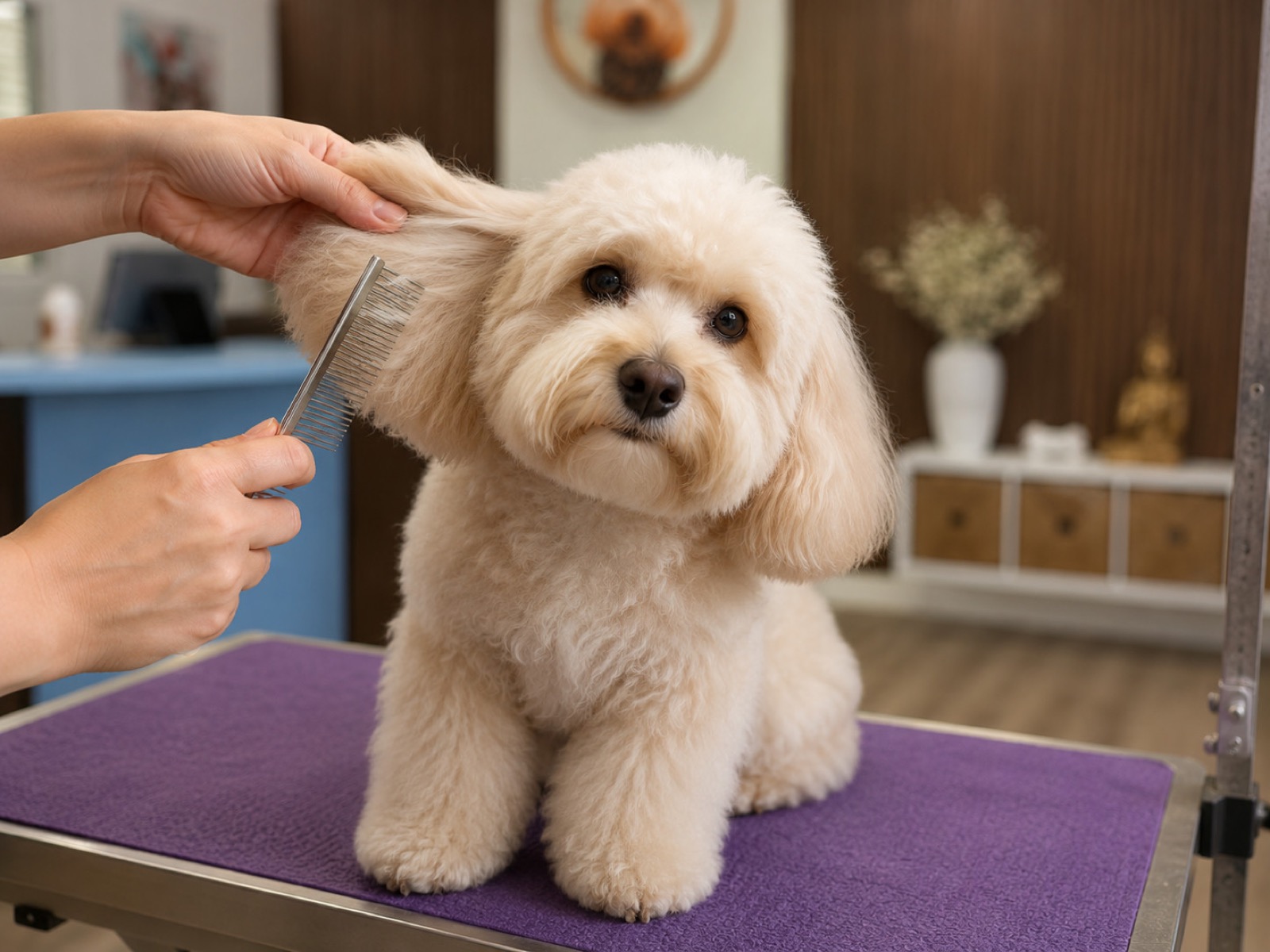
You can usually hear it before you see it. Click, click, click across the kitchen tile. That sound is the most common sign that a dog's nails are too long, and in South Florida, where most homes have tile floors, a lot of dogs are clicking their way through the day.
Nails are easy to put off. They grow slowly, they do not look dramatic, and plenty of dogs make it clear they would rather you leave their feet alone. But nail length affects how your dog stands, walks and grips the floor, and long nails tend to cause problems quietly, over months, before anyone notices.
Every service we offer, from Only Bath to Full Service, includes a nail trim and file, so we handle a lot of nails. We have been doing it in Miami Lakes since 2003. This guide covers how often nails really need trimming, why length matters, what the quick is and how to avoid it, how to handle dark nails, and how to trim at home if you want to. We will also cover the nail problems that belong with your vet.
The quick answer
Most dogs need a nail trim every three to four weeks, and some need it more often. The easy test: when your dog stands on a hard floor, the nails should not touch the ground. If you hear clicking on tile, or the nails touch the floor when your dog is standing still, they are due. Small, frequent trims are better than big, occasional ones, because they keep the quick short.
Why nail length matters
A dog's nail is not a separate part stuck onto the toe. It is connected to the bone of the toe, and when a nail grows long enough to hit the ground, every step pushes the toe back up and out of its natural position. The dog shifts its weight to compensate. Over time that can mean splayed toes, a flattened foot, and extra strain on the wrists, elbows, hips and back. For an older dog with stiff joints, long nails make walking harder than it needs to be.
Long nails cause more immediate trouble too:
- Slipping. A dog standing on the tips of long nails has less of the pad touching the floor, and pads are what grip. On tile, that means sliding, scrambling and sometimes falling, especially for puppies and seniors.
- Snagging and tearing. Long nails catch on carpet, bedding, car seats and fencing. A torn nail bleeds a lot and hurts.
- Curling. Left long enough, nails curve around and can grow into the pad. Dewclaws, the small nails higher up on the inside of the leg, never touch the ground, so they are the ones most likely to curl into the skin.
- Scratches. Long, sharp nails are hard on skin, furniture and floors, and on kids who are playing with the dog.
How often, really?
Three to four weeks is a good starting point, but the right interval depends on your dog.
Where they walk. Rough surfaces like concrete wear nails down a little. Grass, carpet and tile do not. Here in Miami, a lot of dogs spend their days on tile and do most of their walking on grass, partly because the pavement is too hot for paws much of the year. That is the right call for their feet, and it also means their nails get almost no natural wear. Our guide to hot pavement and paw care explains the seven-second test for pavement.
Size and activity. Small dogs and dogs who get carried a lot often need trims more often than big, active dogs. Seniors who walk less tend to need more frequent trims, not fewer.
Individual growth. Some dogs simply grow nails faster than others. Once you know how long it takes your dog to start clicking again, you know your interval.
For many dogs, a grooming visit every four to six weeks lines up reasonably well with their nails, since a trim and file comes with every visit. For dogs whose nails grow quickly, a quick touch-up between grooms keeps things on track. Our guide to how often to groom your dog covers the full grooming interval by coat type.
The quick, explained
Inside each nail is the quick: a core of blood vessels and nerve that runs from the toe partway down the nail. Cut into it and it bleeds and hurts. Avoiding it is the whole skill of nail trimming.
Here is the part most owners do not know. The quick grows along with the nail. When a nail is left long for months, the quick extends further toward the tip, which means you cannot cut the nail back to a healthy length in one go without hitting it. The good news is that it works in reverse too. When you trim a little at a time on a regular schedule, the quick gradually recedes, and over several weeks you can get the nails back to a good length safely.
That is why we always recommend small, frequent trims over big, rare ones. If your dog's nails have been long for a while, do not expect them to be perfect after one visit. Expect a few visits of steady progress.
Light nails vs. dark nails
Light nails are the easy ones. Hold the paw up to good light and you can usually see the pink quick inside the white or clear nail. Trim the tip well short of where the pink begins.
Dark nails hide the quick completely, so you work by looking at the cut surface instead. Take off a thin slice at a time. On the cut end of the nail you will first see a dry, chalky, whitish or grayish surface. As you get closer to the quick, a darker spot appears in the center of the cut, often looking slightly moist or glossy. When you see that dot, stop. You are close.
Dogs often have a mix of light and dark nails. If one of the light nails shows you roughly where the quick sits, use it as a rough guide for the dark ones on the same foot, but still trim the dark ones in thin slices.
Clipping and filing
Clipping takes off length. Filing finishes the job. Every trim we do includes a file, because a freshly clipped nail has sharp edges that scratch skin and catch on fabric. Filing smooths those edges and rounds the tip, and it lets us take off a little more length gradually without risking the quick.
At home, some owners prefer a rotary nail grinder to clippers. Grinders can work well, especially on dark nails, since you remove length in tiny increments. A few tips: introduce the sound and vibration slowly before you touch a nail, keep long hair on the feet held back so it cannot wrap around the grinder, and work in short touches rather than holding it against the nail, since friction builds heat.
Trimming at home, step by step
If you want to handle nails yourself between visits, this is the calm version:
- Set up for success. Good light, a sharp pair of clippers sized for your dog, treats within reach, and styptic powder or cornstarch nearby in case of a nick.
- Get your dog comfortable first. Handle the feet often when nothing is happening. Touch the toes, press gently on the pads, reward calm behavior. A dog who is used to having their feet held is much easier to trim.
- Hold the paw firmly but gently. Press lightly on the pad to extend the nail and spread the toes a little.
- Take small cuts. Trim just the tip, following the natural angle of the nail. On dark nails, take thin slices and check the cut surface each time.
- Do not forget the dewclaws. Check the inside of each front leg, and the back legs too, since some dogs have rear dewclaws.
- Keep it short and positive. One paw a day is a perfectly good plan. Stop before your dog gets upset, and end on a treat.
If your dog panics, fights or tries to bite during nail trims, stop. Forcing it makes the next time harder. Let us handle the nails, and tell us when you book that your dog is sensitive about feet. We groom one dog at a time, in a calm room, and the same people handle your dog each visit, which helps a lot with dogs who worry about having their feet touched.
If you cut the quick
It happens to everyone eventually, including professionals on a wiggly dog. Stay calm, because your dog will take their cue from you. Press styptic powder or cornstarch firmly onto the end of the nail and hold gentle pressure for a few minutes. The bleeding usually stops. Keep your dog quiet for a little while afterward so it does not start again. If the bleeding has not stopped after several minutes of steady pressure, call your vet.
We are groomers, not vets
Some nail problems are medical. Call your veterinarian if a nail is split, broken or hanging, if a nail has grown into the pad, if the toe or nail bed is swollen, red, hot or oozing, if your dog is limping or licking one toe constantly, or if a nail changes color or shape or starts crumbling. Those can point to injury or infection, and they need a vet, not a trim. We will always tell you if we see something like this at the salon.
Keeping nails on a schedule
The hardest part of nail care is consistency. Nails do not announce themselves until the clicking starts, and by then the quick has already grown out a bit. The simplest fix is to tie nail trims to something that already happens on a schedule.
Since every visit with us includes a nail trim and file, along with ear cleaning, anal gland expression and teeth brushing, a regular grooming rhythm takes care of most dogs. You can see exactly what each visit includes on our services page. For dogs whose nails grow fast, or seniors who need them kept short for steady footing, the Paws Membership is a good fit. Members can come in as often as every week or every two weeks, which keeps nails short and the quick receding, with no booking app to deal with. Just call or WhatsApp us.
The short version
Most dogs need a nail trim every three to four weeks. If you hear clicking on tile or the nails touch the floor when your dog stands, they are due. Long nails push the toes out of position, cause slipping, and snag and tear. The quick grows with the nail, so trim small amounts often to keep it short. On dark nails, trim thin slices and stop when you see a dark dot in the center of the cut. Keep styptic powder handy, and call your vet for split nails, swelling, limping or a nail growing into the pad.
If your dog's nails have gotten away from you, or nail trims at home have turned into a wrestling match, bring them by. We will trim and file them, check the feet, and help you set a rhythm that keeps them short from here on.
Frequently asked questions
How often should I trim my dog's nails?
Most dogs need a trim every three to four weeks, though it varies with activity, the surfaces they walk on and how fast their nails grow. Dogs who live on tile and walk mostly on grass, which describes a lot of Miami dogs, get very little natural wear. If you hear clicking on hard floors, it is time.
How do I know if my dog's nails are too long?
Have your dog stand on a hard floor. The nails should sit just off the ground. If they touch the floor, click on tile, or make your dog's toes splay or twist, they are too long. Dewclaws, which sit higher on the leg, should be checked too, since they never wear down and can curl into the skin.
What do I do if I cut my dog's nail too short and it bleeds?
Stay calm and press styptic powder or cornstarch onto the end of the nail with gentle, steady pressure for a few minutes. Most bleeding stops quickly. Keep your dog quiet afterward so it does not restart. If it is still bleeding after several minutes of pressure, call your vet.
Can walking my dog more wear the nails down instead of trimming?
Walking on concrete helps a little, but it rarely keeps nails short enough on its own, and it does nothing for dewclaws. In Miami, long walks on hot pavement are hard on paws for much of the year anyway, so most dogs here need regular trims. Every grooming visit with us includes a nail trim and file.
Can you hear your dog coming across the tile?
Every visit includes a nail trim and file. Book a visit and we will get the nails back to a healthy length and help you keep them there.