
Health & Hygiene
Hot Spots on Dogs in Humid Florida: What They Are and What to Do
A hot spot can go from nothing to a raw, oozing patch in a day, and our humidity helps it along. Here is how to recognize one, why thick and wet coats are prone to them, and why the next call is to your vet.
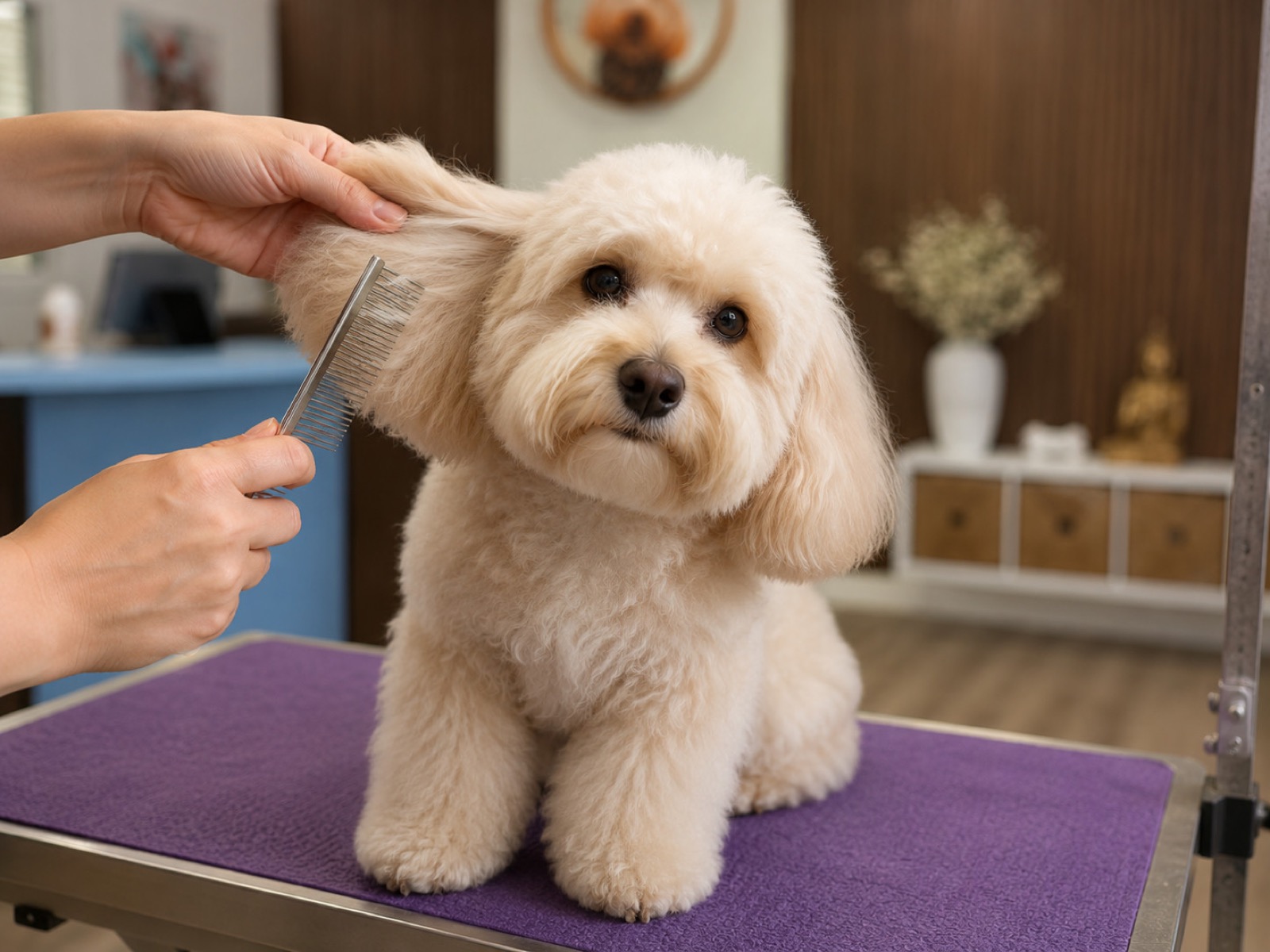
Hot spots have a way of appearing out of nowhere. On Friday your dog's neck looks completely normal. By Sunday there is a red, wet, angry patch the size of a coin, your dog will not stop licking it, and the hair around it is stuck down in a damp clump. By Monday it may be twice the size. Owners are often shocked by how fast it happens, and in South Florida's heat and humidity, fast is the norm.
We see hot spots at the salon regularly, especially on thick-coated dogs and dogs who love the water. Grooming does not treat them, and we will be very clear about that below. But groomers often find them early, and the grooming habits that keep a coat clean and dry are some of the best ways to prevent them. After more than twenty years of grooming dogs in Miami Lakes, here is what we want every owner to know.
How to recognize a hot spot
Look for a patch of skin that is red, moist, or oozing, often with matted or missing hair on top. It may feel warm, smell bad, and seem to be spreading. Your dog will usually lick, chew, or scratch at it constantly and may flinch when you touch it. Common places are the neck, the cheeks, under the ears, the hips, and the base of the tail. If you see one, call your vet. Hot spots need veterinary care.
What a hot spot actually is
"Hot spot" is the everyday name for a patch of inflamed, infected skin that develops quickly on the surface. Vets often call it acute moist dermatitis, and that name describes it well: it comes on suddenly, it is inflamed, and it is wet.
It usually starts with something small that makes the skin itchy or irritated. That might be a flea bite, an allergy flare, a scrape, an itchy ear, or skin that has stayed damp under a thick coat for too long. The dog licks, chews, or scratches at the spot. That damages the skin, which lets bacteria that normally live on the skin take hold, which makes the spot itchier, which makes the dog lick and chew more. That cycle is why a hot spot can grow so quickly, sometimes within hours.
Hot spots are painful. A dog who is normally relaxed about being handled may snap or pull away when you go near one. Be gentle, and do not take it personally.
Why Florida dogs are so prone to them
Hot spots happen everywhere, but our climate stacks the deck. Several things that are everyday parts of life in Miami Lakes, Hialeah, Miramar, and Pembroke Pines are also classic hot spot triggers.
- Humidity. Moisture is a big part of the problem, and our air rarely gives a coat the chance to dry fully on its own. A dense coat that gets damp can stay damp against the skin for hours.
- Water everywhere. Pools, lakes, canals, sprinklers, and the afternoon thunderstorms of the rainy season all soak coats. A dog who swims and then naps on a dog bed with a wet undercoat is a very common hot spot story.
- Fleas all year. Fleas never take a winter break here, and flea bites are one of the most common starting points, especially for dogs with flea allergies.
- Heat. Warm, damp skin under a heavy coat is exactly the environment where irritation turns into infection.
- Allergies. Plenty of dogs deal with environmental or food allergies that make the skin itchy, and itchy skin is where the lick and scratch cycle begins.
Which coats get hot spots most
Any dog can get a hot spot, but thick, heavy coats are at the top of the list. Golden Retrievers, Labradors, German Shepherds, Newfoundlands, Saint Bernards, Huskies, Chow Chows, and other dogs with a dense undercoat trap moisture and heat against the skin. When that undercoat is not brushed out, it packs down and holds water even longer.
Matted coats are another big risk, on any breed. A mat is a tight pad of tangled hair that sits against the skin, holds moisture, and blocks air. It also hides the skin completely, so a hot spot can start underneath and grow large before anyone notices. We have found raw, irritated skin under mats that looked like a harmless clump from the outside. Our guide to matting prevention explains how to keep the coat open down to the skin.
Dogs with floppy ears and ear trouble often get hot spots on the cheek or neck right under the ear, from scratching at an itchy ear. And dogs who swim a lot get them simply because their coats are wet more often.
What we see at the salon
Groomers are often the first to find a hot spot, for the same reason we find fleas and ticks early: we have our hands on every part of your dog, the coat is wet in the tub so the skin is visible, and we work under bright light on a raised table. A spot hidden under the hair at home becomes obvious during a bath or a brush-out.
When we find one, we stop and handle it gently. We do not scrub it, we do not put anything on it, and we do not try to treat it. We will show you where it is and how big it is, and we will tell you plainly that it needs your vet. Depending on how it looks and where it is, we may recommend holding off on parts of the groom until your vet has seen it, because a painful, open spot is not something to bathe, brush, or clip around without guidance. We would rather reschedule than make a sore spot worse or cause your dog pain.
We also keep an eye out for what may have set it off. Flea dirt in the coat, a packed undercoat, mats, or an ear that smells or looks irritated are all worth mentioning to your vet when you go in, and we will point them out.
We are groomers, not vets
A hot spot is an infected wound, and it needs a veterinarian. Treatment usually involves cleaning the area properly, often with the hair clipped away so it can dry, plus whatever your vet decides your dog needs to heal and stop itching. Your vet will also look for the underlying cause, such as fleas, allergies, or an ear infection, so it does not keep coming back. Please do not try human creams, sprays, or home remedies on a hot spot. Call your vet the day you notice it, because they spread fast.
What to do until you can see the vet
Call your veterinarian as soon as you notice a hot spot and follow their instructions. In the meantime, a few simple steps help keep things from getting worse.
- Stop the licking and chewing if you can. If you already have a cone or recovery collar from a past vet visit, this is a good time to use it. Licking keeps the spot wet and spreads the irritation.
- Keep the area dry. No swimming and no baths, and dry your dog off carefully if they get caught in the rain.
- Do not put anything on it unless your vet tells you to. Human ointments, oils, and home remedies can irritate the skin further, and some are not safe if a dog licks them off.
- Do not try to shave or scrub it yourself. A hot spot hurts, and a dog in pain can move suddenly. Let your vet handle the clipping and cleaning.
- Take a photo. Hot spots change quickly. A picture helps your vet see how fast it is growing.
How to prevent hot spots in our climate
You cannot prevent every hot spot, especially if your dog has allergies. But in our experience, the dogs who get them least are the ones whose coats stay clean, open, and dry all the way to the skin. That comes down to a handful of habits.
Dry the coat all the way down
After a swim, a bath, or a downpour, a quick towel-dry is rarely enough for a thick coat. Rinse off pool chlorine, salt water, or lake and canal water with fresh water first. Then work the towel into the coat and keep going until the undercoat near the skin is dry too, since a dry surface can hide a wet base. Do not let a dog with a soaked undercoat go straight to bed.
Keep the undercoat brushed out
Loose undercoat packs down and holds moisture. Brushing several times a week, down to the skin, keeps air moving through the coat. For heavy double coats, regular professional deshedding removes the backlog that home brushing misses.
Watch the collar and harness line
The neck is one of the most common places for a hot spot, and the collar is often part of the reason. A collar or harness that gets soaked in the pool or the rain and stays on holds moisture right against the skin, and it rubs every time your dog moves. After a swim or a storm, take wet gear off and let it and the coat underneath dry before putting it back on. Check that the collar fits with room for two fingers, and run your hand under it every few days to feel for damp, tender, or matted spots.
Stay ahead of fleas year-round
Flea bites are one of the most common triggers, and fleas never leave South Florida. Use the prevention your vet recommends, every month. Our guide to flea and tick season in South Florida explains why it is always the season here.
Keep ears clean and watch for itching
Itchy ears lead to scratching, and scratching leads to hot spots on the cheeks and neck. Every service at our salon includes ear cleaning, and we will tell you if an ear looks or smells off so you can have your vet check it.
Keep a regular grooming rhythm
A professional bath, thorough dry, and brush-out on a steady schedule keep a heavy coat from becoming a moisture trap, and a trained set of eyes on the skin every few weeks catches trouble early. Our guide to how often to groom your dog lays out the right interval by coat type. Members of our Paws Membership can come in as often as every week or every two weeks, which keeps thick coats open and dry through the wettest months.
The short version
A hot spot is a painful patch of inflamed, infected skin that starts from irritation and spreads quickly as a dog licks and scratches. South Florida's humidity, year-round fleas, constant water, and heat make them common here, especially on thick double coats, matted coats, and dogs who swim. Groomers often spot them first, but we do not treat them. If you see a red, wet, oozing patch, call your vet, keep it dry, keep your dog from licking it, and do not put anything on it. To prevent the next one, dry the coat to the skin after every soaking, keep the undercoat brushed out, use your vet's flea prevention every month, and stay on a regular grooming rhythm.
If you want a professional look at your dog's skin and coat, bring them by. We will tell you honestly what we see, and if something needs your vet, we will say so.
Frequently asked questions
What causes hot spots on dogs in Florida?
Hot spots start when something irritates the skin, such as a flea bite, an allergy flare, an itchy ear, or a coat that stays damp against the skin. The dog licks and scratches, the skin breaks down, and bacteria take hold. South Florida's humidity, year-round fleas, frequent swimming, and heat make that cycle much more likely, especially in thick or matted coats.
Can a groomer treat a hot spot?
No. A hot spot is an infected wound and needs a veterinarian. Groomers often find hot spots during a bath or brush-out, and we will show you where it is and tell you to call your vet. We will not scrub or put anything on it, and we may suggest waiting on parts of the groom until your vet has seen it.
Do hot spots go away on their own?
Most hot spots get worse quickly without treatment, because the licking and scratching keep feeding them, and they can double in size in a day. They are much easier to deal with early. Call your vet as soon as you notice a red, moist patch rather than waiting to see what happens.
How do I prevent hot spots after my dog swims?
Rinse the coat with fresh water to remove chlorine, salt, or lake water, then dry it thoroughly all the way down to the skin. Keep the undercoat brushed out so air can move through the coat, and do not let your dog nap with a soaked coat. Year-round flea prevention from your vet and a regular grooming rhythm help a lot too.
Want a trained set of eyes on your dog's skin?
Every groom includes a hands-on look at the coat and skin. Bring your dog by, and we will tell you honestly what we see and when it is time to call the vet.