
Grooming Basics
How Often Should You Groom Your Dog? A Miami Lakes Groomer's Guide
Short answer: most dogs need a full groom every 4 to 8 weeks. The real answer depends on your dog's coat, breed, and the Florida weather. Here's how we think about it after grooming Miami Lakes dogs since 2003.
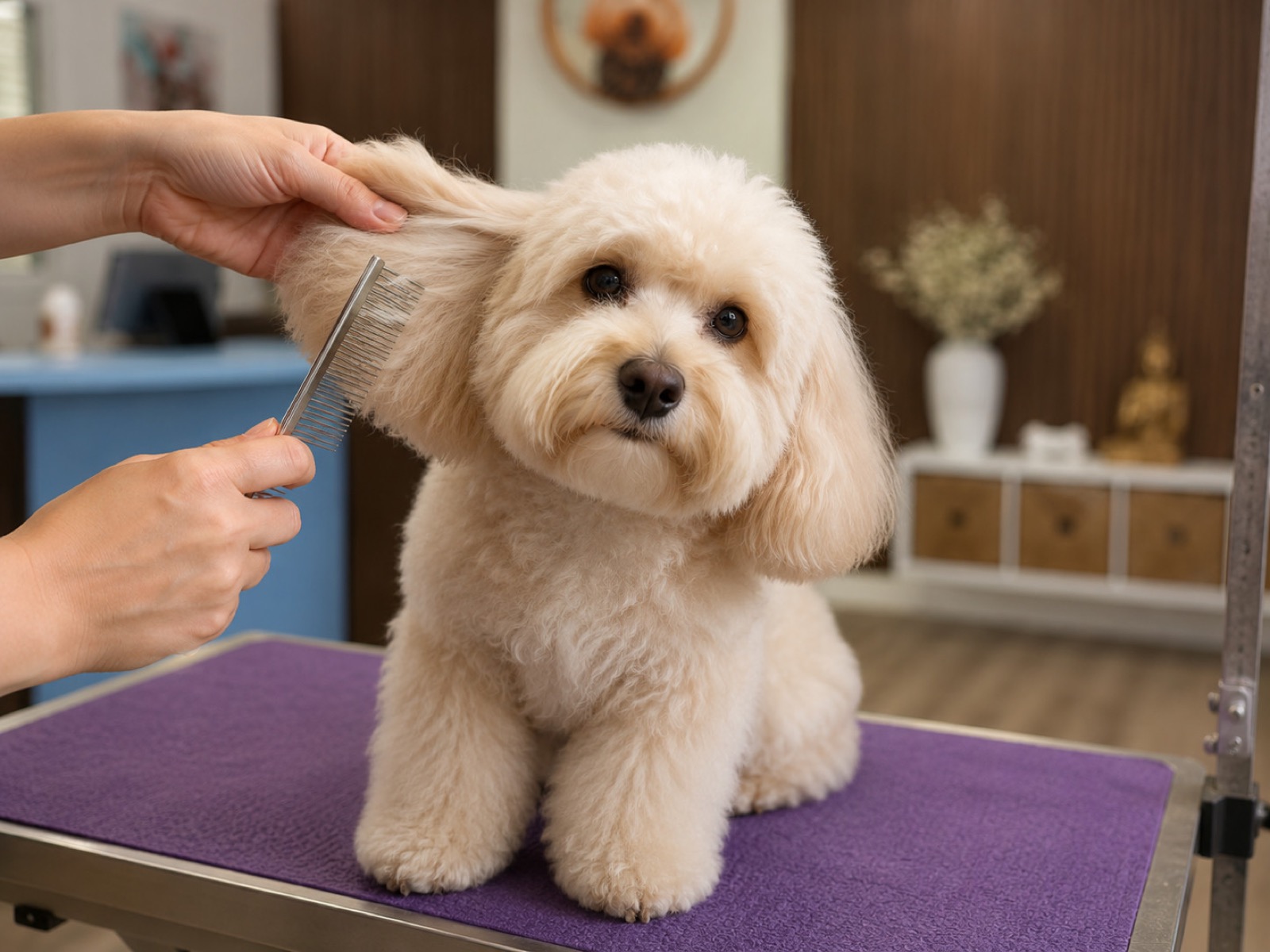
It's the question we hear more than any other, usually right at drop-off: "How often should I really be bringing him in?" It's a fair question, and the honest answer is that there is no single number that fits every dog. A short-haired Chihuahua and a curly Sheepadoodle live in completely different worlds when it comes to coat care.
That said, after more than twenty years of grooming dogs here in Miami Lakes, we've learned that most owners are working with a few simple rules of thumb, and most of them are stretching their visits a little too far apart. This guide walks through how often to groom your dog based on what actually matters: coat type, breed, lifestyle, and the heat and humidity we deal with in South Florida year-round.
The quick answer
Most dogs do best with a full professional groom every 4 to 8 weeks. Curly and doodle coats lean toward every 4 to 6 weeks. Short, smooth coats can stretch to 8 to 12 weeks. Double-coated breeds benefit from a deshedding visit every 6 to 8 weeks. In between, brushing at home a few times a week does most of the heavy lifting.
Why grooming frequency matters more than people think
It's tempting to treat grooming as a cosmetic thing, like a haircut you book when your dog "looks shaggy." But grooming is closer to dental care than it is to a trip to the salon. The schedule you keep affects your dog's skin, comfort, and even their behavior.
When a coat goes too long without attention, a few things start to happen. Loose hair gets trapped instead of falling out. Tiny tangles form behind the ears, under the legs, and around the collar. Those tangles tighten into mats. A mat is not just unsightly. It pulls on the skin every time your dog moves, traps moisture against the body, and hides skin problems until they're serious. In a humid climate like ours, a damp mat can turn into a hot spot in days.
Nails are the other quiet problem. A nail that grows too long changes the way a dog stands and walks, which over time stresses the joints. Long nails are also more likely to crack or catch and tear. None of this is dramatic on day one. It's the slow drift that gets dogs into trouble, and a regular schedule is what stops the drift.
Grooming frequency by coat type
Forget breed labels for a second. The single best predictor of how often your dog needs grooming is the type of coat they carry. Here's how the main coat types break down.
Curly and wavy coats (Poodles, Doodles, Bichons)
This is the highest-maintenance group, and it's not close. Curly coats don't shed the way other coats do. Instead, loose hair stays tangled in the curls, which means matting is always working against you. These dogs need a full groom every 4 to 6 weeks, and they need real brushing at home in between, not a quick once-over.
If you love the fluffy "teddy bear" look, the trade-off is upkeep. The longer you keep the coat, the more often it has to be brushed and groomed to stay healthy. Many of our doodle owners settle into a four-week rhythm because it keeps the coat soft and prevents the dreaded "we had to shave him down" conversation.
Double coats (Golden Retrievers, German Shepherds, Huskies)
Double-coated dogs have a soft undercoat under a longer outer coat. They shed, and in Miami they shed all year because the seasons never really tell their bodies to stop. The goal here isn't a haircut. It's deshedding, which means pulling out that dead undercoat before it blankets your house and traps heat against your dog's skin.
A deshedding groom every 6 to 8 weeks keeps these dogs cooler and far more comfortable. One thing we tell every double-coat owner: please don't ask anyone to shave your double-coated dog to "keep them cool." It does the opposite. That coat is insulation that works both ways, and shaving it can permanently change how it grows back. Deshedding, not shaving, is the answer.
Short and smooth coats (Chihuahuas, Beagles, Pit Bulls, Frenchies)
Good news for these owners: this is the lowest-maintenance group. A bath, nails, ears, and a hygiene tidy every 8 to 12 weeks usually does it. But "low maintenance" is not "no maintenance." Short-coated dogs still shed, still grow long nails, and still need their ears and glands checked. French Bulldogs in particular need attention to their skin folds, which trap moisture in our humidity and can get irritated fast.
Long silky coats (Yorkies, Shih Tzus, Maltese)
These coats grow continuously, like human hair, and they tangle easily. Plan on a full groom every 4 to 6 weeks. Owners who want to keep the long, flowing look need to brush almost daily. Most pet owners choose a shorter "puppy cut" that's easier to maintain and keeps the dog comfortable in the heat.
Coat type cheat sheet
Curly / doodle: every 4 to 6 weeks. Long silky: every 4 to 6 weeks. Double coat: deshed every 6 to 8 weeks. Short / smooth: every 8 to 12 weeks. When in doubt, ask us at drop-off and we'll set a rhythm for your specific dog.
What about bathing at home between grooms?
Owners often assume more baths equals a cleaner, healthier dog. It usually doesn't. A dog's skin and coat rely on natural oils, and over-bathing strips those oils away, which leaves the skin dry, itchy, and more prone to irritation. For most dogs, a bath at home once every three to four weeks is plenty.
What matters far more than bathing is brushing. Brushing a few times a week removes loose hair before it tangles, spreads those natural oils through the coat, and lets you catch a small mat while it's still small. If you only adopt one habit from this article, make it regular brushing. It's the cheapest, most effective thing you can do, and it makes every professional groom go faster and smoother for your dog.
The Miami factor: why Florida dogs are different
Grooming advice written for a dog in Denver doesn't fully apply to a dog in Miami Lakes, and we see the difference on our table every day. Three things make South Florida unique.
Heat and humidity. Our weather is warm and damp almost year-round. Moisture gets trapped in thick coats and skin folds, which creates the perfect conditions for hot spots, yeast, and that "wet dog" smell that won't quit. Dogs here often benefit from slightly more frequent hygiene trims and deshedding than the same breed would need up north.
Year-round shedding. In cooler climates, dogs shed hard in spring and fall and then settle down. In Miami, the lack of a real cold season means many dogs shed steadily all twelve months. That's why we lean on regular deshedding visits rather than waiting for a "shedding season" that never really arrives.
Outdoor lifestyle. Lots of local dogs are at the beach, at the park, or in the backyard year-round. Sand, salt water, pollen, and grass all end up in the coat. An active outdoor dog simply needs grooming more often than a couch companion of the same breed.
How lifestyle changes the schedule
Two dogs of the exact same breed can need very different schedules based on how they live. A few questions we ask owners:
- Does your dog swim or go to the beach? Salt and chlorine dry the coat and skin, so frequent swimmers often need more regular conditioning baths.
- Any allergies or skin sensitivity? Dogs with itchy skin often do better on a consistent, medicated-bath schedule that a groomer and your vet set together.
- Is there a child or someone with allergies at home? More frequent deshedding keeps loose hair and dander down.
- How much can you brush at home? Be honest. If brushing isn't going to happen, a shorter cut and slightly more frequent visits keep your dog comfortable without the guilt.
Signs your dog is overdue for a groom
Even with a schedule, it helps to know the warning signs that your dog needs to come in sooner rather than later:
- You can hear nails clicking on tile or wood floors.
- You feel tangles or mats when you run your fingers through the coat, especially behind the ears and under the legs.
- There's a noticeable smell that a quick bath doesn't fix.
- Your dog is scratching, licking, or chewing at one spot.
- The coat looks dull, greasy, or is shedding in clumps.
- Eyes are watering or hair is growing into them.
If you're nodding at two or more of these, it's time. None of them are emergencies on their own, but together they mean the coat has drifted past comfortable.
Why a regular schedule is easier (and kinder) than catch-up grooming
Here's something most owners don't realize until they've lived it: a dog who comes in on a regular schedule has an easier, calmer, and often cheaper grooming experience than a dog who only comes in when things have gotten bad.
When a coat is in good shape, grooming is gentle and quick. When a dog comes in heavily matted, the kind and humane choice is often to shave the coat short, because brushing out a tight mat is painful and can damage the skin. That's not the result anyone wants. Regular visits keep your dog out of that situation entirely.
This is exactly why we built our Paws Membership. For dogs that need consistent care, a membership locks in a regular rhythm, keeps the coat healthy, and spreads the cost into a simple monthly plan instead of a surprise bill every couple of months. It's the easiest way we know to stay ahead of the drift, plus it includes a discount on boarding for member families.
So, how often should YOUR dog be groomed?
If you want a simple starting point, use the coat-type ranges above and then adjust for your dog's lifestyle and our Miami weather. When in doubt, lean toward the shorter end of the range. It's almost always easier on your dog to come in a little more often than to wait too long.
And if you'd rather just ask a person, that's what we're here for. Bring your dog by, and we'll feel the coat, look at the nails and skin, and give you a straight answer for your specific dog. No upsell, just the honest rhythm that keeps them comfortable.
Frequently asked questions
How often should I take my dog to a professional groomer?
Most dogs do best with a full professional groom every 4 to 8 weeks. Curly and doodle coats need it every 4 to 6 weeks to prevent matting, short-coat breeds can stretch to 8 to 12 weeks, and double-coated dogs benefit from a deshedding visit every 6 to 8 weeks, especially in Miami's heat.
How often should I bathe my dog at home between grooms?
For most dogs, once every 3 to 4 weeks at home is plenty. Bathing too often strips natural oils and dries out the skin. Brushing several times a week matters more than frequent baths for keeping the coat healthy between professional visits.
Does Florida weather change how often my dog needs grooming?
Yes. Miami's heat and humidity make dogs hold moisture in thick coats and shed more year-round. Many local dogs benefit from slightly more frequent deshedding and hygiene trims than the same breed would need in a cooler, drier climate.
Is it bad to shave a double-coated dog to keep them cool?
Yes, in most cases. A double coat insulates against heat as well as cold, and shaving it can leave your dog less protected and may change how the coat grows back. For double-coated breeds, regular deshedding is the right way to keep them cool, not shaving.
Not sure what your dog needs?
We've been grooming Miami Lakes dogs since 2003. Bring yours in and we'll set the right schedule for their coat, no guesswork.