
Coat Care
How to Brush Your Dog Between Grooms: A Guide by Coat Type
What happens at home between visits decides how the next groom goes. Here are the tools, the technique groomers use, and how often to brush each type of coat, straight from our table in Miami Lakes.
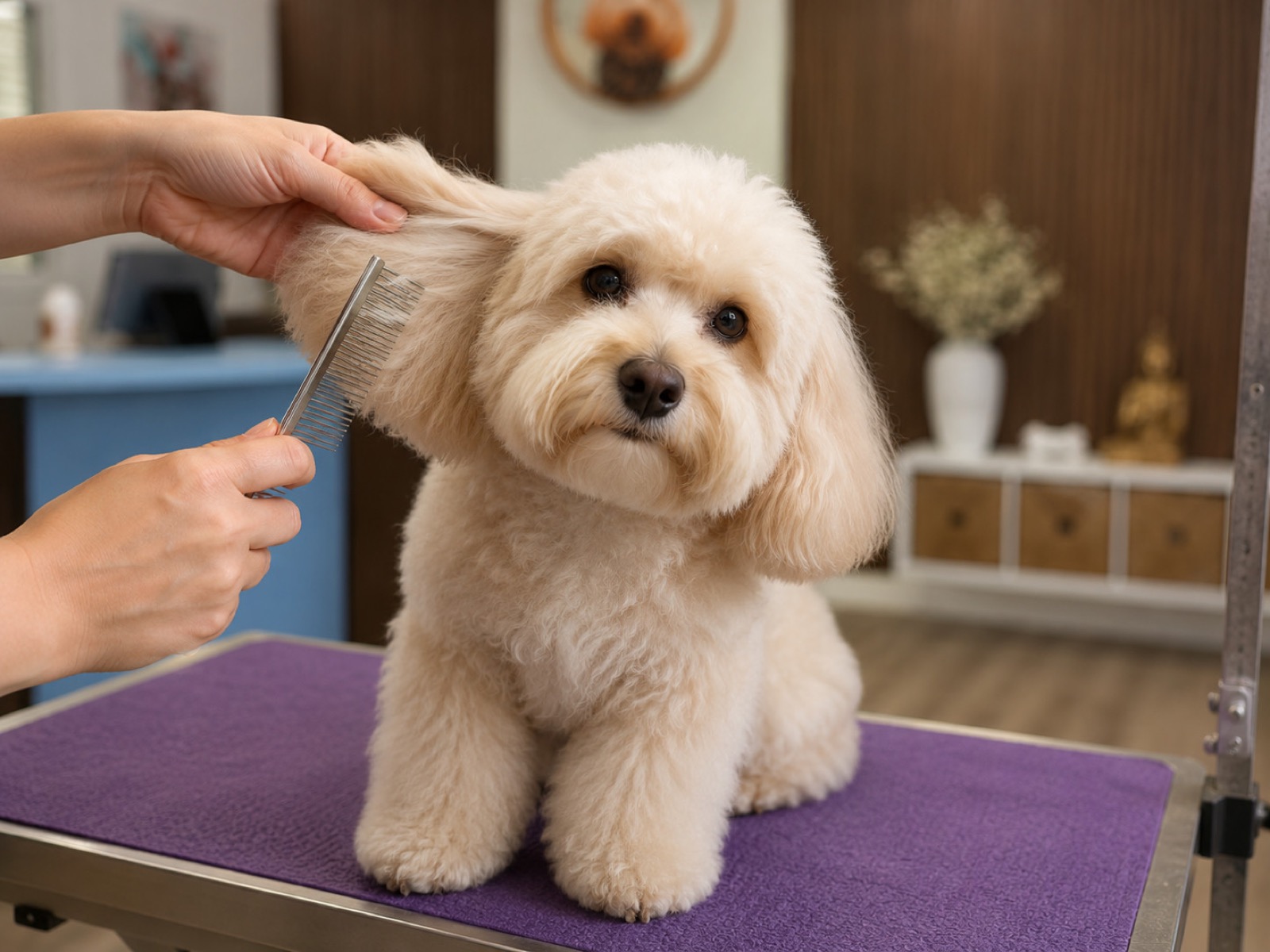
Most of what decides how your dog's next groom goes happens at home, in the weeks between visits. A dog who gets brushed a few times a week walks in with an open, tangle-free coat, and the groom is quick, comfortable and focused on making them look good. A dog who has not been brushed since the last visit often walks in with mats close to the skin, and that groom turns into damage control.
The good news is that brushing at home does not take long once you know how to do it. The catch is that most owners brush the wrong way. They run a brush over the top of the coat, the outside looks smooth, and underneath the tangles keep growing. We see it all the time at our salon in Miami Lakes, on dogs whose owners were sure they were brushing enough.
This guide covers the tools you need, the technique groomers use, and how often and how long to brush each type of coat. It is the routine we wish every owner knew.
The comb test
When you think you are done brushing, run a metal comb through the coat from the skin outward, one section at a time. If the comb glides all the way through, that section is done. If it catches, there is a tangle under there. Go back to that spot with the brush, then test again. The comb tells you the truth that a smooth-looking coat hides.
Why brushing between grooms matters
Brushing does several jobs at once. It removes loose hair before it can twist into tangles. It spreads the skin's natural oils down the hair, which keeps the coat healthier. It lets air reach the skin, which matters a lot in our humidity. And it gives you a regular, close look at your dog's skin, where you can catch ticks, lumps, hot spots and irritation early.
South Florida makes regular brushing more important. Humidity, afternoon rain, backyard pools and the lakes and canals around Miami Lakes all mean coats get wet often. Damp hair tangles faster, and tangles that get wet tighten up. A coat that is brushed regularly dries faster and stays open.
It also makes the groom itself better. When the coat comes in tangle-free, we can spend the time on the finish and the style. When it comes in matted, the options shrink. Sometimes the kindest choice is to shave a badly matted coat short and start fresh, which is rarely what an owner was hoping for. Our guide to matting prevention goes deeper on how mats form and where they start.
The basic toolkit
You do not need a drawer full of tools. Most dogs need two or three, picked for their coat.
- Slicker brush. A flat or slightly curved brush with fine wire bristles. This is the workhorse for curly, long and double coats. Use a light touch. Pressing too hard can scratch the skin, which groomers call brush burn.
- Metal comb. A steel comb with wider teeth on one end and finer teeth on the other. This is your inspection tool for checking for tangles after brushing. If you only buy one tool, a good comb is a smart pick.
- Pin brush. Long pins with rounded tips, useful for long, silky coats that you want to keep long.
- Undercoat rake. A tool with one or two rows of long teeth that reach through the outer coat to pull out loose undercoat on double-coated dogs.
- Rubber curry or bristle brush. For short, smooth coats. It lifts loose hair and dirt, and most dogs enjoy the massage.
- A light detangling spray made for dogs. A fine mist reduces breakage and makes brushing easier on long and curly coats. Brushing a completely dry, dusty coat with force breaks the hair.
If you are not sure which tools fit your dog, ask us at your next visit. We are happy to show you what to use and how to hold it.
Line brushing: the technique that works
Line brushing is how groomers brush, and it is the difference between a coat that looks brushed and a coat that is brushed. Instead of brushing over the top of the coat, you work through it in small sections so the brush reaches the skin every time.
1. Start low. Begin at a back leg, down near the foot, and work your way up.
2. Hold the coat up. With one hand, lift and hold the hair above where you are working, so a thin line of skin shows at the part.
3. Brush the line below. Brush the hair below that line down and away from the skin in short, gentle strokes, starting right at the skin.
4. Move up a little. Let down a thin section of hair from your hand, make a new part slightly above the last one, and repeat.
5. Work in sections. Do each leg, then each side, the chest, the rear, the tail, the neck and the head. With a big coat, do not try to do the whole dog in one sitting. One area a day is fine.
6. Comb to check. When a section is done, run the metal comb through it from the skin out. If it catches, brush that spot again.
Pay extra attention to the places where friction and moisture cause tangles first: behind the ears, under the collar or harness, the armpits, the chest, the inside of the back legs, the belly and around the tail. These are the spots that mat first on almost every coat.
How to brush by coat type
Curly and doodle coats
Poodles, doodles and other curly coats are the most likely to mat, because loose hair stays trapped in the curl instead of falling out. They need the most brushing: ideally every day, or at least every other day, with a slicker and a metal comb, using line brushing all the way to the skin. A shorter haircut makes this a lot easier. Our post on doodle grooming and matting covers doodle coats in detail.
Long, silky coats
Shih Tzus, Yorkies, Maltese and similar breeds have fine hair that tangles easily, especially behind the ears and in the armpits. Mist the coat lightly, then line brush with a pin brush or slicker and follow with the comb. Every day or two is ideal for a long coat. Keep the hair above the eyes up in a topknot or trimmed short. Many owners choose a shorter cut to lighten the daily work.
Double coats
Golden retrievers, huskies, Pomeranians, German shepherds and other double-coated breeds have a soft undercoat under a longer outer coat. In our climate the undercoat sheds steadily all year, with heavier waves on top of that. Use an undercoat rake to pull out the loose undercoat, then a slicker to finish, working in sections. Watch the fluffy areas behind the ears, on the back of the legs and under the tail. Please do not shave a double coat to manage shedding. Regular brushing and deshedding baths do the job better. Our golden retriever deshedding guide explains why.
Short, smooth coats
Chihuahuas, French bulldogs, boxers and other short-coated dogs do not mat, but they do shed, and their skin benefits from regular brushing. A rubber curry brush or bristle brush removes loose hair and dirt and gives you a chance to check the skin. Many short-coated dogs love it.
Wiry coats
Schnauzers and many terriers have a wiry outer coat with softer furnishings on the legs, beard and eyebrows. The body is fairly easy, but the furnishings tangle. A slicker and comb a few times a week, with attention to the beard after meals and the legs after walks, keeps them neat.
How long and how often
Here is a rough guide. Your dog's coat, haircut length and lifestyle will move these numbers around.
- Curly and doodle coats: daily or every other day, about 10 to 15 minutes
- Long, silky coats: daily or every other day, about 10 minutes
- Double coats: two or three times a week, about 10 to 20 minutes, and daily during a heavy shed
- Wiry coats: two or three times a week, about 5 to 10 minutes
- Short, smooth coats: once or twice a week, about 5 minutes
Short sessions more often beat long sessions once in a while. Five focused minutes a day does more for a coat than an hour on Sunday.
Making brushing a pleasant habit
A dog who likes being brushed is a dog who gets brushed more. Pick a calm time, like after a walk when your dog is tired. Choose a comfortable spot with good light. Start with the areas your dog enjoys, like the back and chest, and save the sensitive ones, like feet and tail, for when they are settled. Use treats and praise. Stop before your dog has had enough, so the session ends on a good note. With a puppy, start with a minute or two and build up from there.
If your dog pulls away from the same spot every time, pay attention. It could be a tangle that pulls, or it could be a sore spot that needs a closer look.
Brushing around baths in a humid climate
Always brush before a bath. Water tightens tangles, and a tangle that gets wet and then dries can become much harder to remove. Brush the whole coat out first, bathe, dry thoroughly, then brush again once the coat is fully dry.
The same goes for swimming and rain. After a dip in the pool or a walk that ended in an afternoon storm, towel your dog off well, let them dry completely in the air conditioning, and give the coat a quick brush once it is dry. A coat that stays damp against the skin in our heat is a recipe for tangles and skin trouble.
When to stop and call us
Some tangles are not a home job. If you find a mat that is tight against the skin, a mat your dog flinches from when you touch it, or a section of coat that feels like felt, stop brushing that area. Forcing a brush through a tight mat hurts, and it can make your dog dread brushing for good.
Please do not cut mats out with scissors. Mats sit right against the skin, and it is very easy to cut the skin along with the hair. It happens to careful owners all the time. Bring your dog in and let us handle it safely. Depending on the coat, we will gently work the tangles out or recommend a shorter cut so your dog can start fresh and comfortable.
We are groomers, not vets
Brushing is a great chance to check your dog's skin. If you find a red, moist or oozing patch, a scab that keeps coming back, a new lump, flaky or greasy skin, hair loss, fleas or ticks, or a spot your dog does not want touched, have your veterinarian take a look. We will point out what we see at the salon too, but diagnosing and treating skin problems is a job for your vet.
The short version
Brush between grooms so the coat never gets the chance to mat. Pick the right two or three tools for your dog's coat, usually a slicker and a metal comb. Use line brushing, working in small sections from the skin out, and check every section with the comb. Brush curly and long coats daily or every other day, double coats a few times a week, and short coats once or twice a week. Always brush before a bath and again after your dog is dry. Keep sessions short and positive. If a tangle is tight to the skin, stop and let us handle it.
Pair the home routine with regular grooms, and your dog's coat stays healthy and easy to care for. If keeping up feels like a lot, the Paws Membership lets members come in as often as every week or every two weeks with the same groomers every time, and there are no surprise dematting fees because the coat stays knot-free between visits. Want a quick lesson on the right brush for your dog? Ask us at drop-off, or call 305-690-7137.
Frequently asked questions
How often should I brush my dog?
It depends on the coat. Curly, doodle and long silky coats do best with brushing every day or every other day. Double coats need it two or three times a week, and daily during a heavy shed. Short, smooth coats are fine with once or twice a week. Short, frequent sessions work better than one long session.
What kind of brush should I use for my dog?
Most dogs need a slicker brush and a metal comb. Long silky coats also do well with a pin brush, double coats with an undercoat rake, and short coats with a rubber curry or bristle brush. The comb matters for every coat because it shows you where tangles are hiding. Ask us at your next visit and we will show you what fits your dog.
Should I brush my dog before or after a bath?
Both. Brush the coat out completely before the bath, because water tightens tangles and can turn them into mats. Then dry your dog thoroughly and brush again once the coat is dry. In our humid climate, getting the coat fully dry is as important as the brushing itself.
My dog hates being brushed. What can I do?
Keep sessions very short, use treats, start with the areas your dog enjoys, and stop before your dog has had enough. Check that the brush is not scratching the skin and that you are not pulling on tangles. If your dog flinches from one spot every time, there may be a mat or a sore spot there, so have it checked. If the coat is already tangled, let us reset it so brushing at home can start fresh.
Coat already tangled?
Bring your dog in and we will reset the coat, then show you the brushes and technique that keep it knot-free between visits.