Breed Guide
Pomeranian Grooming Guide: Double Coat Care, Teddy Bear Trims and Why We Don't Shave
The round, puffed-out Pom look comes from a double coat working the way it should. Here is how to keep it that way in Miami heat: the brushing, the trims that work, and why the clippers stay away.
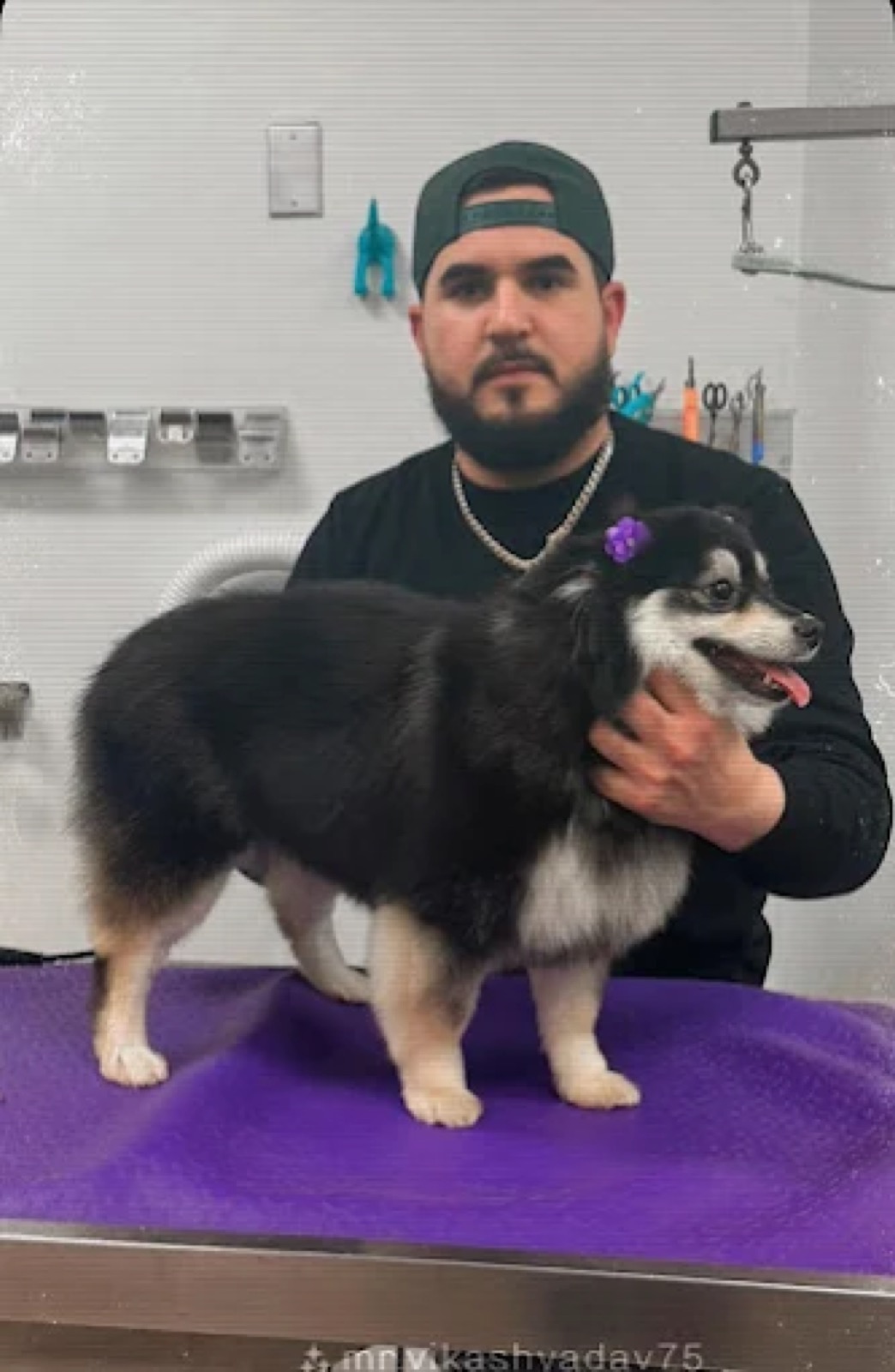
A well-groomed Pomeranian looks like it was designed by someone who really loved round things. A round face, little ears peeking out of the ruff, a plume of a tail curled over a round body, all of it standing out from the skin in a soft cloud. That look comes mostly from the coat itself, a double coat working the way it is meant to, and keeping it that way takes a specific kind of care.
Poms are a familiar sight on our table in Miami Lakes, and they are also one of the breeds owners get the most mixed advice about. Some people are told to shave them for the heat. Some are told never to let scissors near the coat. The truth sits in between, and it starts with understanding how that coat works.
This guide covers the Pomeranian double coat, why we do not shave Poms, the trims that do work well (including the popular teddy bear look), how to brush at home, and the small-dog details like nails and teeth that matter just as much as the fluff.
The Pom grooming rhythm at a glance
Brush down to the skin a few times a week, and more often when the coat is shedding. Book a professional bath, dry, and brush-out every four to six weeks. Trim, shape, and tidy, but do not shave. Keep nails short, ears clean, and teeth brushed, because small dogs need those details handled on a schedule.
How the Pomeranian double coat works
A Pomeranian has two coats. Close to the skin is a soft, thick, cottony undercoat. On top of it sits a longer, coarser outer coat of guard hairs. The undercoat is what pushes the outer coat up and away from the body, which is what gives a Pom that standing, puffed-out silhouette.
The two layers do different jobs. The undercoat insulates. The outer coat shields the skin from sun, dirt, and moisture. Together they act as a buffer between the skin and the outside world in both directions: they hold warmth in when it is cold, and they slow down how fast outside heat and sun reach the skin.
The undercoat is also where the work is. It sheds steadily in our climate, and loose undercoat that is not brushed out mats quickly in the friction spots. On a Pom, that means behind the ears, in the ruff around the neck, under the collar, in the armpits, and in the britches, the long fluffy hair on the back of the thighs.
Why we do not shave Pomeranians
In Miami heat, it is natural to look at a little dog in a thick fur coat and think shaving would be a kindness. We understand the instinct, and it comes from a good place. But for a Pomeranian, shaving tends to cause more problems than it solves.
- The coat may not grow back the same. Pomeranians are known for coats that can come back slowly, unevenly, or with a different texture after a close shave, and in some dogs patches stay thin for a long time. This is the main reason we steer owners away from it.
- It removes sun protection. A shaved Pom has skin exposed to strong South Florida sun that the coat normally shades.
- It does not stop shedding. The hair still falls out. It is just shorter.
- A well-brushed coat is the more comfortable option. A Pom with the loose undercoat removed lets air move through the coat. A packed, matted undercoat is what makes a Pom hot, and the fix for that is deshedding, not clippers.
We go through the full reasoning, for Poms and for other double-coated breeds like Huskies, Goldens, and Shepherds, in our article on whether to shave a double-coated dog. The one exception is severe matting. If a coat is so matted that brushing it out would hurt the dog, taking it short can be the kind choice, and we will always talk it through with you first. Prevention is much better, which is what the brushing section below is for.
Trims that work well on a Pom
Not shaving does not mean not trimming. Scissors are a Pom's best friend. A good Pom trim shapes and tidies the outer coat while leaving the undercoat at a protective length. These are the looks owners ask for most.
The natural, tidied Pom
The coat is left full, and the edges get tidied: feet rounded so they look neat and pick up less dirt, the sanitary area trimmed for cleanliness, the ear tips neatened, and stray hairs shaped so the outline looks smooth and round. Many Pom owners love this because it looks like the classic breed, only cleaner.
The teddy bear trim
This is the most requested Pom style right now. The coat is scissored shorter and evenly into a round, plush shape, with a round face, short rounded ears, and a body that looks soft and compact. Done well, it leaves enough length to protect the skin and the undercoat while looking shorter and cuter than the natural coat. The key is that it is scissored, not shaved, and the length stays sensible. Ask about it, and we will tell you honestly how short your Pom's coat can go while staying healthy.
Styles we usually talk owners out of
Clipper-short body cuts, including the style with a shaved body and a full lion's mane, take the body coat down far enough to carry the same regrowth risk as a full shave. For most Pomeranians, we recommend a scissored trim instead.
Brushing your Pom at home
A Pomeranian coat stays healthy and mat-free with brushing a few times a week, and daily during heavy shedding. Ten to fifteen minutes is enough for most Poms once you have the technique down.
- Your tools: a slicker brush to loosen the undercoat, a metal comb to check your work, and, for very thick coats, an undercoat rake used gently.
- Mist the coat lightly first. Brushing a bone-dry coat can break hair and build static. A light spritz of water makes the coat easier to work through.
- Line brush. Part the coat so you can see skin, brush a small section from the skin outward, then move the part up a little and repeat. Brushing toward the head and then letting the coat fall back helps give that stand-off look.
- Hit the friction spots every time: behind the ears, the ruff, under the collar, the armpits, the britches, and the tail.
- Finish with the comb. If it slides from skin to tip, you are done. If it catches, brush that section again.
Our step-by-step guide on brushing your dog between grooms walks through line brushing in more detail.
Bathing and drying a Pom in Florida humidity
The bath is the easy part. The dry is where Pom care gets serious, especially in South Florida. That dense undercoat holds water, and in our humidity it can stay damp next to the skin for a long time if it is only towel-dried. A damp undercoat mats faster and can lead to irritated skin and hot spots. Our guide to hot spots in Florida dogs explains why moisture trapped in a thick coat is such a problem here.
A careful dry all the way down to the skin, with brushing as the coat dries, is a big part of what gives a freshly groomed Pom that full, fluffy finish. If you bathe at home between visits, rinse until the water runs clear and dry the coat completely, especially behind the ears and in the britches. And if your Pom gets caught in an afternoon storm, a real dry is worth the effort.
The small-dog details that matter just as much
Pomeranians are tiny, and tiny dogs come with a few grooming needs that are easy to overlook under all that fluff.
Nails
Small, light dogs do not wear their nails down much, especially on tile and carpet, so nails get long fast. Long nails change how a dog stands and walks and can snag or split. If you hear clicking on the floor, they are due.
Teeth
Small breeds are known for dental trouble, partly because their teeth are crowded into a small mouth. Brushing at home makes a real difference, and every service at our salon includes teeth brushing. Bad breath, red gums, or tartar buildup are worth a conversation with your vet, who handles dental cleanings.
Ears, eyes and paws
Pom ears are small and upright, but the hair around them mats easily and the ears still need regular cleaning. The fur around the eyes can collect tear staining and debris, and the hair between the paw pads grows long and slippery on tile floors. All of these are part of a regular groom.
We are groomers, not vets
Because we brush through every inch of a Pom's coat, we often notice things early: thinning patches, flaky or red skin, lumps, fleas, or a coat that is not growing back the way it should. We will always tell you what we see. But hair loss that has nothing to do with a shave, skin changes, and dental problems are questions for your veterinarian, not your groomer, and we will say so plainly.
Which service a Pom needs
Every one of our services includes nails, ears, anal glands, and teeth brushing. For a Pomeranian, the choice mostly comes down to the look you want.
- Only Bath is a bath and thorough brush-out with the hygiene basics. It works well between trims, or for a Pom whose natural coat you want left completely untrimmed.
- Grooming adds a sanitary trim, paws cleared and rounded, an eye-area trim, and a hand-scissored finish, without a body cut. For a natural, tidied Pom, this is often exactly right.
- Full Service adds the full haircut and body styling, plus a cologne finish. This is the one for a teddy bear trim.
You can see exactly what each level includes on our services page. Every dog is priced individually by coat type and condition, so a Pom with a brushed-out coat is a different job from a Pom with a packed undercoat.
How often to groom a Pomeranian
Most Poms do well with a professional bath, dry, and brush-out every four to six weeks, plus brushing at home a few times a week. During heavy shedding, or if you keep a teddy bear trim, closer to every four weeks keeps the coat at its best. Owners who want the coat to stay full and knot-free all year often choose our Paws Membership, which lets your dog come in as often as every week or every two weeks with the same groomers each time, so the people shaping that round outline know exactly how it looked last visit.
The short version
A Pomeranian's fluffy look comes from a double coat: a dense undercoat that pushes up a longer outer coat. Keep that coat brushed down to the skin a few times a week, especially behind the ears, in the ruff, the armpits, and the britches. Do not shave a Pom, because the coat may grow back slowly or patchily, the skin loses its sun protection, and the dog still sheds. Choose a scissored trim instead, from a natural tidy-up to a round teddy bear look. Dry the coat completely after every bath or soaking in our humidity. And keep up with nails, teeth, and ears, because small dogs need those details just as much as the fluff.
If your Pom is due for a groom or you want to talk about a teddy bear trim, bring them by or send us a photo on WhatsApp at 305-619-9784. We will tell you honestly what your Pom's coat can do.
Frequently asked questions
Should I shave my Pomeranian for the Florida heat?
We do not recommend it. A Pomeranian's double coat may grow back slowly, unevenly, or with a different texture after a close shave, and shaving exposes the skin to strong sun. A thoroughly brushed and deshedded coat lets air move through it and is the more comfortable option. The exception is severe matting, where taking the coat short can be the kindest choice.
How often should a Pomeranian be groomed?
Most Pomeranians do well with a professional bath, dry, and brush-out every four to six weeks, plus brushing at home a few times a week. Poms in a teddy bear trim or going through a heavy shed often do best closer to every four weeks. Regular visits also keep nails, ears, and teeth on schedule.
What is a teddy bear trim for a Pomeranian?
A teddy bear trim is a scissored style that shapes the coat into a round, plush, shorter look with a round face and small, rounded ears. It is cut with scissors, not shaved, so enough coat stays on to protect the skin and undercoat. Your groomer can tell you how short your Pom's coat can go while staying healthy.
Why is my Pomeranian's coat not growing back?
Pomeranian coats can be slow or patchy to regrow after a shave, and some dogs take a long time to fill back in. Hair loss can also have medical causes, especially if it shows up without a shave or comes with skin changes. Ask your veterinarian to take a look, since only a vet can find the cause.
Time for a Pom refresh?
Bring your Pomeranian in for a thorough brush-out and a scissored trim that keeps the coat healthy. We will talk through the look you want before we start.